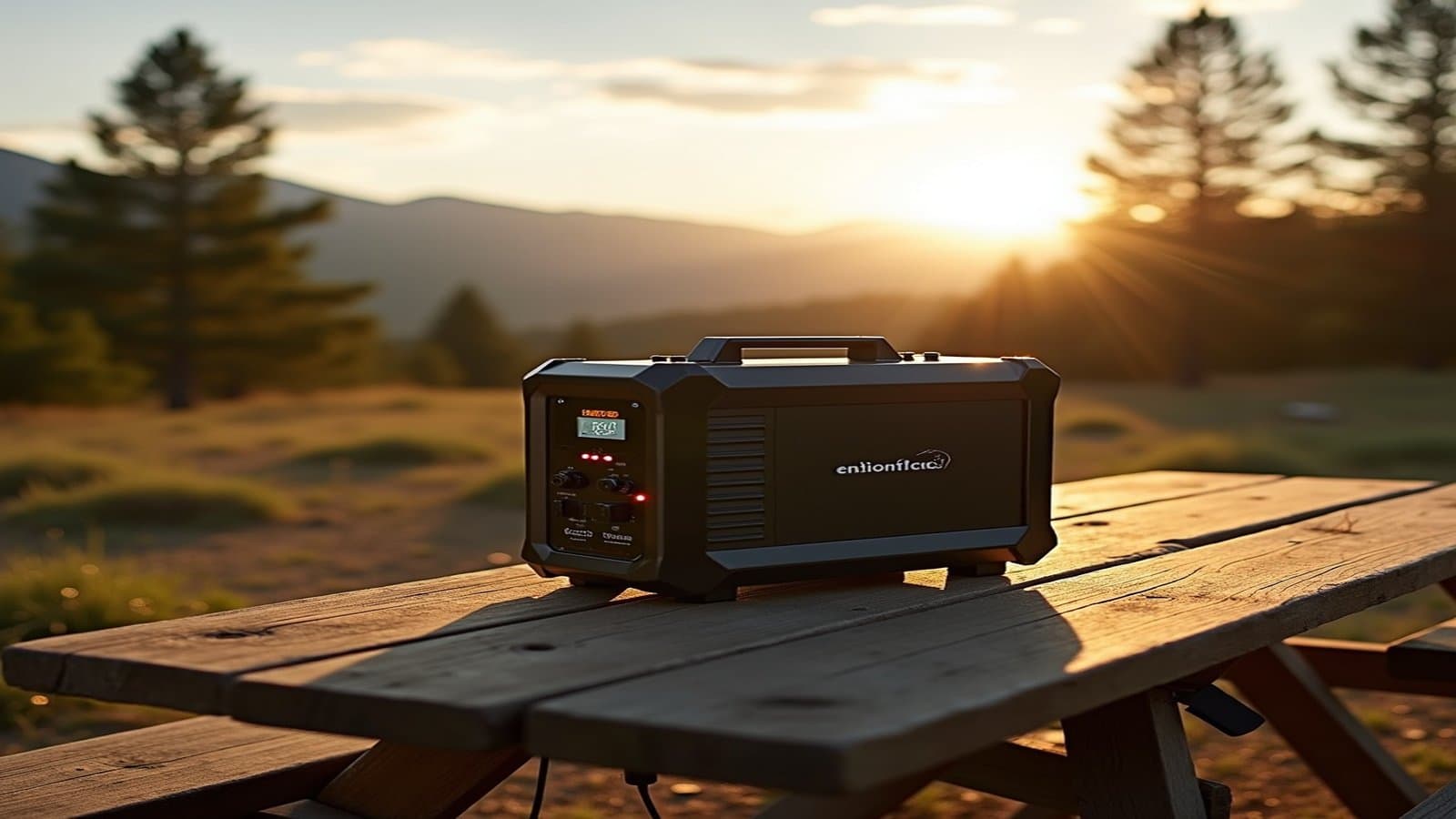
For weekend camping with phones, laptops, and lights, you need a 300–500Wh power station ($150–$300). For home backup that runs a fridge and essentials through a blackout, you need 1,000–2,000Wh ($400–$800). For whole-home backup including AC, you need 4,000Wh+ ($2,000+). Unlike gas generators, power stations store energy in batteries, so the key number isn't watts, it's watt-hours (Wh). Use our calculator below to add up exactly what you need.
Power Station Sizing Calculator
Four steps: pick your use case, check your devices, set duration, get your recommendation with specific product picks.
What will you use it for?
Pick your primary use case. This filters the device list to what matters.
Common Recommendations
Most popular calculator results. Pick your scenario to see the full breakdown.
Compact (250–500Wh) — Camping, phones, laptops
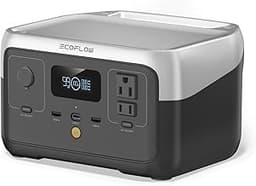
EcoFlow
EF ECOFLOW Portable Power Station RIVER 2, 256Wh 300W | 1 Hr Fast Charging, L...
$200–$250
★4.5·351 ratings
Lightest and cheapest LiFePO4 from a major brand. Perfect entry point for weekend camping.
Check Price at EcoFlow →Also available on Amazon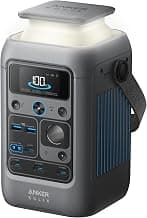
Anker
Anker SOLIX C300 DC Portable Power Station, 288Wh, 300W, Outdoor Camping | 28...
$180–$250
★4.6·1,722 ratings
Anker's battery expertise in the most affordable LiFePO4 package. Built-in LED lantern is a nice camping bonus.
Check Price on Amazon →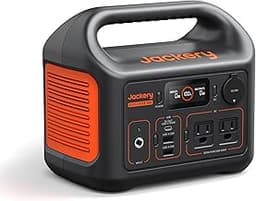
Jackery
Jackery Explorer 300 (292Wh LiFePO4)
$220–$280
★4.6·11,181 ratings
Most recognized brand in portable power. Simple LCD, plug-and-play design, and the best solar panel ecosystem.
Check Price on Amazon →Mid-Range (700–1,100Wh) — Serious camping, short blackout backup
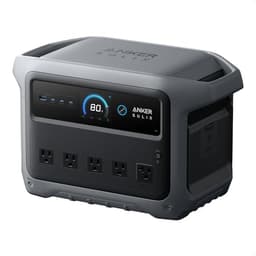
Anker
$430–$799
★4.5·340 ratings
Best overall pick. Fastest charging in class at 49 minutes, 2,000W output handles almost anything, and 4,000-cycle LiFePO4 battery.
Check Price on Amazon →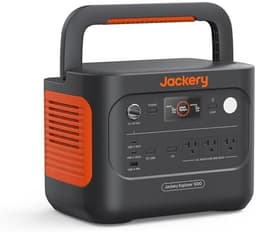
Jackery
$500–$799
Lightest 1,000Wh unit on the market at 23.8 lbs. Best brand recognition and a 4,000-cycle battery.
Check Price at Jackery →Also available on Amazon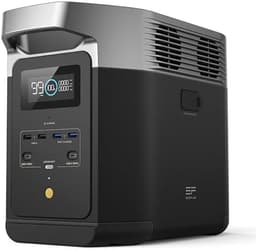
EcoFlow
$450–$650
Most expandable option — start at 1kWh and add extra batteries up to 3kWh. 15 ports is the most in class.
Check Price at EcoFlow →Also available on AmazonHigh-Capacity (1,500–2,500Wh) — Extended off-grid, multi-day backup
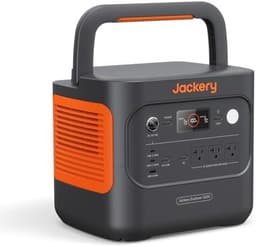
Jackery
$749–$1,499
★4.6·743 ratings
Best power-to-weight in the 2kWh class. Runs a full-size fridge for 24+ hours and charges to 80% in 66 minutes.
Check Price at Jackery →Also available on Amazon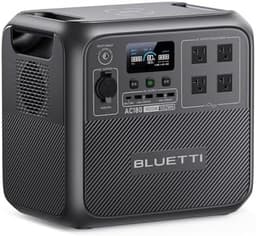
Bluetti
$400–$600
★4.6
Best value in the 1,000–1,200Wh range. Punches above its price with 1,800W output and LiFePO4 battery.
Check Price at Bluetti →Also available on Amazon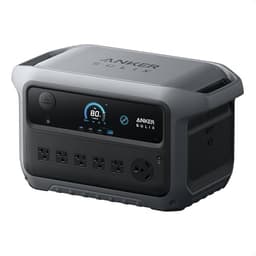
Anker
$780–$1,050
★4.4·1,162 ratings
Most expandable mid-range option with a built-in RV port. Expandable to 4,096Wh for serious off-grid setups.
Check Price on Amazon →Whole-Home Backup (3,000Wh+) — Multi-day home backup, off-grid
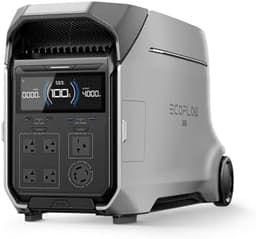
EcoFlow
$2,500–$3,500
★4.2·276 ratings
The serious home backup option. Connects to your breaker panel with transfer switch kit for true whole-home power.
Check Price at EcoFlow →Also available on Amazon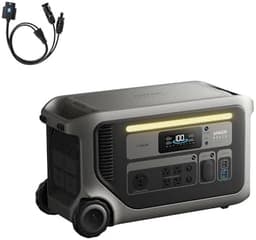
Anker
$1,500–$2,000
★4.4·275 ratings
Widest range of buyers — serious enough for home backup at 3,072Wh, portable enough to wheel around with built-in handle.
Check Price on Amazon →
Jackery
$2,800–$4,000
★4.2
Highest base capacity on the market. 5,040Wh out of the box means maximum runtime without expansion batteries.
Check Price at Jackery →Also available on AmazonComplete Your Setup
Accessories that work with any power station. Add solar charging, more outlets, and protection on the go.
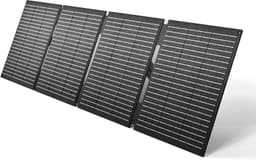
Solar Charging
MARBERO 100W Foldable Solar Panel
★4.3·2,191 ratings
Recharge off-grid. IP68 waterproof, folds flat, works with most power stations.
Check Price on Amazon →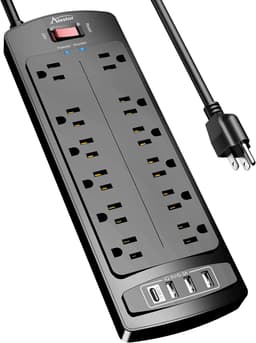
Power Distribution
ALESTOR 12-Outlet Surge Protector Power Strip
★4.8·50,224 ratings
Split one AC outlet into 12 plus 4 USB. 2,700 joules of surge protection for your devices.
Check Price on Amazon →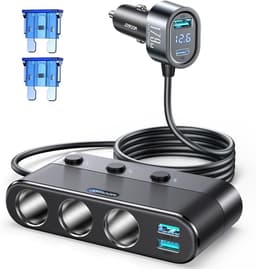
Vehicle Charging
JOYROOM 7-in-1 Car Charger Adapter (179W)
★4.7·2,767 ratings
Charge phones and small gear from a 12V/24V car socket. Useful backup when you are on the road.
Check Price on Amazon →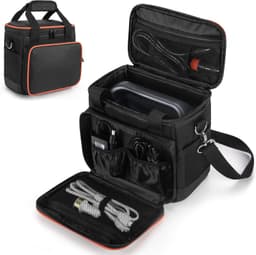
Storage & Transport
Trunab Power Station Carrying Bag
★4.7·1,619 ratings
Padded, water-resistant travel case that protects your station and keeps cables organized.
Check Price on Amazon →More Tools
Already own a power station, or need help with solar and comparisons?
Quick Reference: What Size Do You Need?
Skip the calculator. Find your scenario and get a ballpark capacity.
| If You Need To Power... | For How Long | You Need At Least... | Price Range |
|---|---|---|---|
| Phones, cameras, lights only | 2–3 days camping | 300Wh | $150–$250 |
| Laptop + phones + lights | Weekend trip | 500Wh | $200–$400 |
| Fridge + lights + WiFi + phones | 8–12 hour blackout | 1,000Wh | $400–$600 |
| Fridge + lights + WiFi + TV | 24-hour blackout | 1,500–2,000Wh | $500–$1,200 |
| RV with AC running | Full weekend | 2,000–3,000Wh | $800–$2,000 |
| Whole home essentials (no AC) | 2+ day outage | 3,000–5,000Wh | $1,500–$4,000 |
| Whole home with central AC | Multi-day outage | 5,000Wh+ or gas generator | $3,000+ |
Need to run central air conditioning? A portable power station probably isn't enough. You need a standby generator or a very large expandable system (10,000Wh+). See our sister site whatgeneratorsize.com for generator sizing.
Add Solar to Your Power Station
Pair solar panels with your power station and you can run indefinitely off-grid. The right panel size depends on your station's capacity and how many hours of sun you get per day.
Size Your Solar Panels →Frequently Asked Questions
What size power station do I need for camping?
For basic camping (phones, lights, speaker), 300Wh is plenty. If you're running an electric cooler, step up to 1,000Wh. A 500Wh unit covers most weekend campers comfortably. The EcoFlow River 3 (245Wh, $219) handles phones and laptops for a weekend at just 7.8 lbs. For longer trips with a 12V cooler, the Anker SOLIX C1000 Gen 2 (1,024Wh, $599) is the sweet spot with 49-minute fast charging.
What size power station do I need for a refrigerator?
A standard fridge draws about 150W but cycles on and off, averaging 50–60W actual consumption. Budget about 1,200–1,500Wh per full day of fridge runtime. A 1,000Wh power station runs a fridge for roughly 12–15 hours. The Anker SOLIX C1000 Gen 2 (1,024Wh) handles a day of fridge power; for multi-day outages, the Jackery Explorer 2000 v2 (2,042Wh) runs a fridge for 24+ hours.
What size power station do I need for home backup?
For essentials (fridge, lights, WiFi, phone charging) during a short outage, 1,000–2,000Wh handles 8–24 hours. For multi-day backup or if you want to run a space heater or window AC, you need 3,000Wh+. The EcoFlow Delta Pro 3 (4,000Wh, $2,999) connects directly to your breaker panel via transfer switch for true whole-home backup, expandable to 48kWh.
What is the difference between watts and watt-hours?
Watts (W) measure how much power a device uses right now — like speed. Watt-hours (Wh) measure total energy over time — like distance. A 100W device running for 5 hours uses 500Wh. Your power station's watt-hour rating tells you how long it will last. Also check the inverter wattage — that's the maximum draw the station can handle at once. A 1,000Wh station with a 1,500W inverter runs anything under 1,500W.
What size power station do I need for an RV?
Without AC: 1,000–1,500Wh covers lights, fridge, devices, and a TV for a weekend. With the RV air conditioner (draws 800–1,800W), you need 2,000–3,000Wh minimum, and solar panels help significantly. The Anker SOLIX C2000 Gen 2 (2,048Wh) has a built-in TT-30R RV port and is expandable to 4,096Wh, making it the best dedicated RV option.
Can a power station run a space heater?
Technically yes — a 1,500W heater on a 2,000Wh station runs for about 1 hour. Practically, it's a poor use of battery capacity. An electric blanket uses only 100W and keeps you warm all night on a 1,000Wh station. If you need whole-room heating during an outage, a propane heater is far more efficient. Power stations excel at electronics, fridges, and lights — not resistive heating.
How long does a 1,000Wh power station last?
It depends on your load. At 100W draw (laptop + lights + phone charging), about 8.5 hours. At 500W draw (mini fridge + TV + devices), about 1.7 hours. At 50W (just phone charging and LED lights), about 17 hours. Real-world runtime is about 85% of the calculated number due to inverter and battery management losses. Use our calculator above for your exact scenario.
Power station vs generator — which should I get?
Power stations are silent, emit no fumes, work indoors, and recharge from solar. Generators are louder and require fuel but produce unlimited power as long as you have gas. If you need under 3,000Wh and value silence/portability, get a power station. If you need to run central AC or power heavy equipment continuously, get a generator. For generator sizing, see our sister site whatgeneratorsize.com.
What does LiFePO4 mean and why does it matter?
LiFePO4 (lithium iron phosphate) is a battery chemistry that lasts 3,000–4,000 charge cycles vs. 500–800 for older lithium-ion. It's also safer and more stable in extreme temperatures. At one charge cycle per day, a LiFePO4 battery lasts 8–10 years before dropping to 80% capacity. In 2026, every power station worth buying uses LiFePO4. Avoid older NMC lithium-ion units.
Can I charge a power station with solar panels?
Yes. Most power stations accept 100–400W of solar input. A 200W solar panel can fully recharge a 1,000Wh station in 5–6 hours of direct sun. Match the panel's voltage to the station's input range — brand-matched panels guarantee compatibility. Solar charging extends off-grid runtime significantly: our calculator reduces total capacity needs by 30% when you check "solar panels" because 4–6 hours of sun per day offsets a meaningful chunk of daily consumption.
What size power station do I need for a CPAP machine?
A CPAP draws about 30–50W. A 300Wh power station runs a CPAP for 2–3 nights. A 500Wh unit gives you 4+ nights. Use the DC outlet instead of AC to avoid inverter losses and extend runtime by 20–30%. The EcoFlow River 3 (245Wh, 7.8 lbs) is the top CPAP pick — light enough for air travel, enough capacity for 2 nights, and 12V DC output for efficiency.
How much does a portable power station cost?
300Wh units start around $150–$250. 1,000Wh units run $400–$600. 2,000Wh units cost $700–$1,200. Whole-home backup systems (4,000Wh+) start at $2,000. Prices have dropped 30–40% since 2024 thanks to LiFePO4 battery cost reductions. The Anker SOLIX C1000 Gen 2 at $599 represents the best overall value — 1,024Wh with 2,000W output and the fastest charging in its class.
All Power Station Reviews
EcoFlow
EF ECOFLOW Portable Power Station RIVER 2, 256Wh 300W | 1 Hr Fast Charging, L...
245Wh · $200–$250
Anker
Anker SOLIX C300 DC Portable Power Station, 288Wh, 300W, Outdoor Camping | 28...
288Wh · $180–$250
Jackery
Jackery Explorer 300 (292Wh LiFePO4)
292Wh · $220–$280
Anker
Anker SOLIX C1000 Gen 2
1,024Wh · $430–$799
Jackery
Jackery Explorer 1000 v2
1,070Wh · $500–$799
EcoFlow
EcoFlow Delta 2
1,024Wh · $450–$650
Jackery
Jackery Explorer 2000 v2
2,042Wh · $749–$1,499
Bluetti
Bluetti AC180
1,152Wh · $400–$600
Anker
Anker SOLIX C2000 Gen 2
2,048Wh · $780–$1,050
EcoFlow
EcoFlow Delta Pro 3
4,000Wh · $2,500–$3,500
Anker
Anker SOLIX F3000
3,072Wh · $1,500–$2,000
Jackery
Jackery Explorer 5000 Plus
5,040Wh · $2,800–$4,000