Solar Panel Pairing Calculator
A 200W solar panel charges a 1,000Wh power station in about 6 hours of direct sun. Double the panels, halve the time. But real-world output depends on your location, panel angle, and weather. Use the calculator below to get an accurate estimate for your exact setup.
Total solar input: 200W
Results
Your solar setup
1× 200W = 200W total
Produces approximately 1,040 Wh/day in 6.5 hours of sun
Full charge time (direct sun)
~1.5 hours
Realistic (with sun hours)
< 1 day
Your panels can fully recharge your station every day with sun to spare.
Calculations use 80% real-world efficiency to account for temperature, angle, cloud cover, and cable losses.
Your Power Station
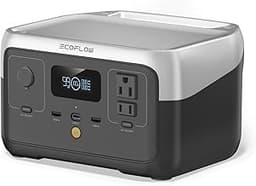
EcoFlow
EF ECOFLOW Portable Power Station RIVER 2, 256Wh 300W | 1 Hr Fast Charging, L...
$200–$250
Recommended Solar Panels
How Solar Charging Works on Power Stations
Portable power stations accept DC input through a solar charging port (usually an XT60 or Anderson connector). Solar panels convert sunlight into DC electricity, which flows directly into the battery through a built-in charge controller. Most modern power stations use MPPT (Maximum Power Point Tracking) charge controllers, which optimize the voltage and current from your panels to charge as efficiently as possible.
The key spec to look for is your power station's maximum solar input. A station rated for 200W of solar input will cap at 200W regardless of how many panels you connect. Exceeding this limit won't damage the unit (the charge controller handles it), but you won't get any extra speed from the additional wattage.
Real-world solar output is typically 70-85% of a panel's rated wattage. A 200W panel produces around 160W in good conditions and drops further with cloud cover, suboptimal angle, or high temperatures. Our calculator uses an 80% efficiency factor to give you realistic estimates.
How Many Solar Panels Do I Need?
The answer depends on three things: your power station's capacity, how much energy you use per day, and how many sun hours your location gets.
Quick sizing guide:
- 300Wh station:One 100W panel charges it in about 4 hours of direct sun.
- 1,000Wh station:One 200W panel takes about 6 hours. Two 200W panels cut it to 3 hours.
- 2,000Wh station:You need at least 400W of solar (two 200W panels) for a single-day charge in most US locations.
- 4,000Wh+ station:Plan for 800W+ of solar input. These units often support parallel panel connections for higher wattage.
If you're using the power station daily (van life, off-grid cabin), size your solar array to produce at least as much energy as you consume each day. For occasional camping trips where you fully charge before leaving, a smaller panel works fine since you only need to top off what you use.
Solar Charging Tips for Maximum Output
Angle toward the sun
Panels produce the most power when pointed directly at the sun. Adjust the angle throughout the day if possible. A 45-degree tilt facing south works well for most US locations during summer.
Avoid shade completely
Even partial shade on one cell can cut output by 50% or more. Traditional panels wire cells in series, so one shaded cell bottlenecks the entire panel. Place panels in full sun with zero obstruction.
Temperature matters
Solar panels lose efficiency in extreme heat. Output drops about 0.3-0.5% per degree Celsius above 25C (77F). On hot days, elevate panels off the ground to allow airflow underneath.
Check your cable length
Longer cables between panel and power station increase voltage drop. Keep cables under 30 feet when possible. If you need distance, use thicker gauge wire or panels with higher voltage output.
Not sure what size power station you need?
Use our main sizing calculator to add up your devices and get a recommendation.
Power Station Sizing Calculator →